

Melanotan II (Tan Spray) — 10ml
Synthetic Melanocortin Peptide for Pigmentation & Receptor Signaling Research
$95.00
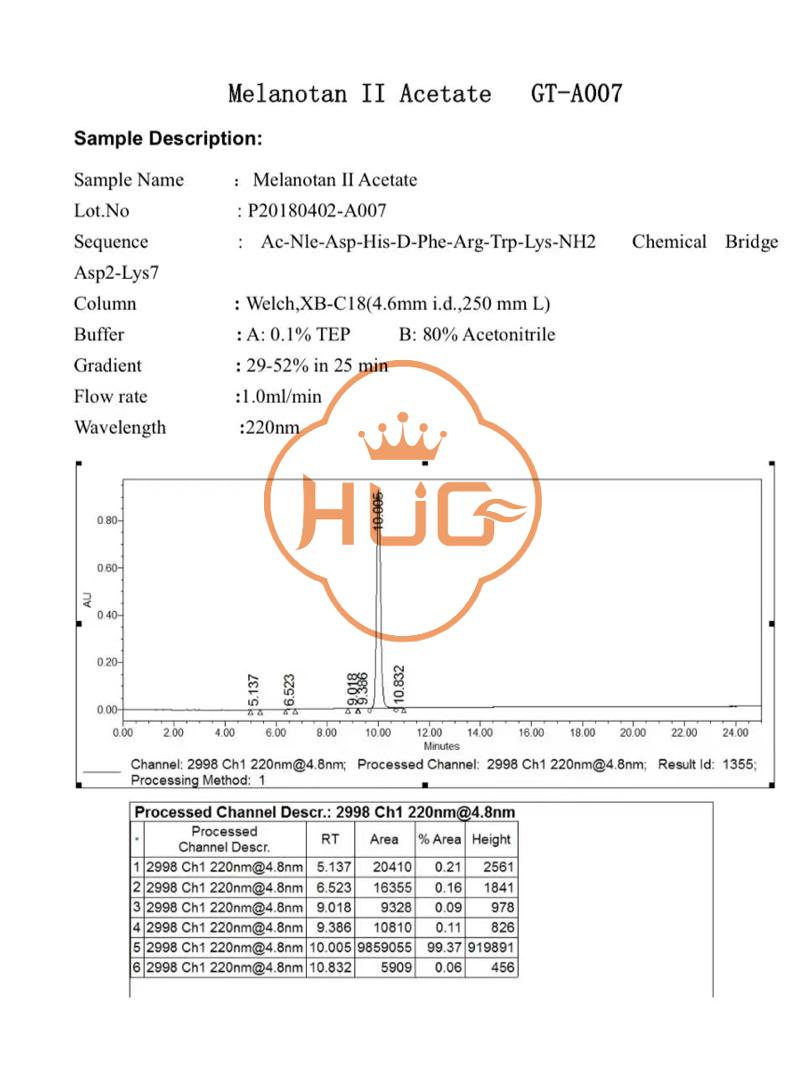
- 99%+ Purity Tested
- Canadian Lab Tested
- Ships from Toronto, Ontario
- Free Bacteriostatic Water with Every Order
Overview
Melanotan II (MT-2) is a synthetic analog of alpha-melanocyte-stimulating hormone (α-MSH), studied for its interaction with the melanocortin receptor system (MC1R–MC5R). In research settings, MT-2 is examined for its role in melanin production signaling, pigmentation pathways, and central melanocortin activity.
Due to its broad receptor affinity, Melanotan II is frequently referenced in dermatological, pigmentation, neuroendocrine, and melanocortin signaling research models where receptor interaction and downstream pathway effects are of interest.
Mechanism of Action
Melanotan II functions by binding to melanocortin receptors, primarily MC1R, which are involved in pigmentation signaling.
Research indicates MT-2 interaction may involve:
- Activation of melanocyte signaling pathways
- Increased melanin synthesis signaling
- Modulation of melanocortin-mediated cellular responses
- Central nervous system melanocortin receptor activity
Unlike endogenous α-MSH, Melanotan II is structurally modified for enhanced stability and receptor interaction, making it a useful compound for studying melanocortin receptor dynamics.
Research Applications
Pigmentation & Melanogenesis Research
Melanotan II is commonly studied in pigmentation-focused models:
- Melanin synthesis signaling
- Melanocyte activation pathways
- UV-response and pigmentation regulation studies
- Skin tone and pigment distribution signaling
Dermatological Research
MT-2 is examined in skin-related research contexts:
- Skin cell signaling pathways
- Melanocyte–keratinocyte interaction studies
- Pigmentation disorder research models
Cutaneous signaling pathway analysis
Melanocortin Receptor Research
Due to multi-receptor activity, MT-2 is valuable in receptor studies:
- MC1R–MC5R signaling comparison
- Receptor affinity and selectivity analysis
- Downstream cAMP signaling pathways
- Melanocortin system mapping
Neuroendocrine Research
Melanocortin receptors are involved in CNS signaling:
- Central melanocortin pathway analysis
- Appetite and energy signaling research models
- Neuroendocrine pathway interaction studies
- Brain–skin axis research
Inflammatory & Immune Pathway Research
α-MSH analogs are studied for immune-related signaling:
- Cytokine modulation markers
- Anti-inflammatory signaling pathways
- Immune cell receptor interaction studies
- Skin immune response modeling
Research Advantages
Why Researchers Study Melanotan II
- Synthetic analog of endogenous α-MSH
- Broad melanocortin receptor interaction
- Useful for pigmentation and receptor signaling studies
- Enables comparative melanocortin pathway analysis
- Widely referenced in dermatological research literature
Melanotan II is valued for its stable and well-characterized interaction with the melanocortin system, rather than isolated or single-function activity.
IMPORTANT:
This product is exclusively intended for laboratory research purposes only.
Not approved for human consumption or veterinary use.
Not intended for diagnostic, therapeutic, or consumable applications.
Scientific References
Hadley ME, et al. “Melanocortin peptides and receptors.” Endocr Rev. 1998.
Cone RD. “The melanocortin receptors.” Nat Rev Endocrinol. 2006.
Abdel-Malek ZA, et al. “Melanocortin receptors and the regulation of pigmentation.” Physiol Rev. 2001.
Bohm M, et al. “α-MSH and the skin.” Ann N Y Acad Sci. 2006.
Gantz I, Fong TM. “The melanocortin system.” Am J Physiol Endocrinol Metab. 2003.