
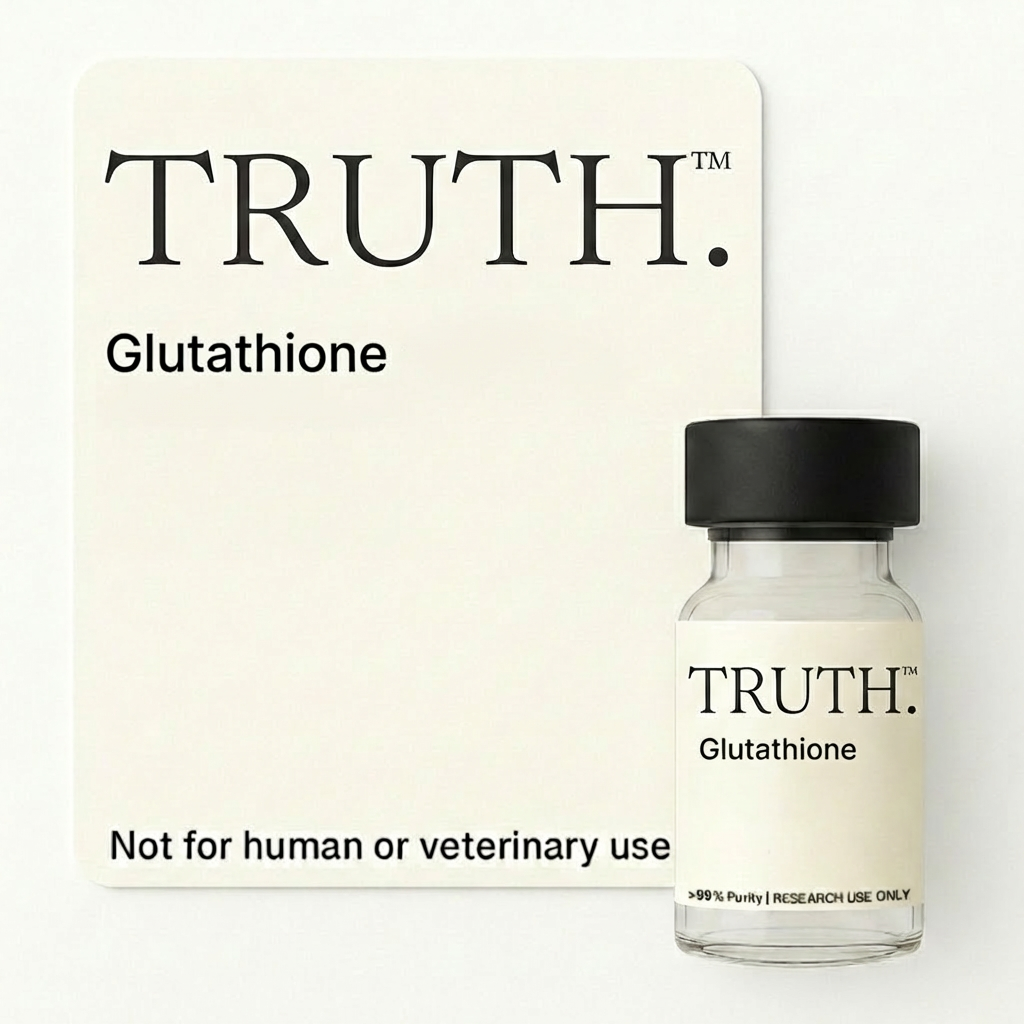
Glutathione 1500mg
Tripeptide for Antioxidant & Cellular Defense Research
🎁 FREE 3ml Bacteriostatic Water with Every Vial Purchased
Every peptide vial order automatically includes a complimentary 3ml vial of bacteriostatic water at no extra cost.
$180.00
- 99%+ Purity Tested
- Canadian Lab Tested
- Ships from Toronto, Ontario
- Free Bacteriostatic Water with Every Order
Overview
Glutathione is a naturally occurring tripeptide composed of glutamate, cysteine, and glycine, extensively studied for its role in cellular antioxidant defense, redox balance, and detoxification signaling.
In research settings, Glutathione is examined for its involvement in protecting cells from oxidative stress, maintaining intracellular stability, and supporting critical biochemical pathways related to cellular resilience and longevity.
Glutathione is frequently referenced in oxidative stress, metabolic, mitochondrial, and cellular health research models due to its central role in maintaining cellular homeostasis.
Mechanism of Action
Glutathione functions as a primary intracellular antioxidant, participating directly in redox reactions and cellular defense systems.
Research indicates Glutathione is involved in:
- Neutralization of reactive oxygen species (ROS)
- Maintenance of cellular redox balance
- Support of glutathione-dependent enzyme systems
- Protection of proteins, lipids, and DNA from oxidative damage
Unlike single-use antioxidants, Glutathione operates as part of a recycling antioxidant system, continuously regenerated within the cell to support ongoing oxidative defense.
Research Applications
Oxidative Stress Research
Glutathione is widely studied in oxidative damage models:
- Reactive oxygen species (ROS) mitigation
- Cellular stress response markers
- Redox imbalance analysis
- Antioxidant system efficiency studies
- Reactive oxygen species (ROS) mitigation
Cellular Detoxification Research
Glutathione plays a critical role in detoxification pathways:
- Phase II detoxification signaling
- Conjugation pathway analysis
- Cellular clearance mechanisms
- Xenobiotic processing studies
Mitochondrial & Metabolic Research
Mitochondrial function is closely tied to redox balance:
- Mitochondrial protection markers
- Energy metabolism stability
- Oxidative phosphorylation efficiency
- Cellular energy resilience research
Immune & Inflammatory Pathway Research
Glutathione is examined for its role in immune signaling:
- Immune cell redox balance
- Inflammatory response modulation markers
- Cytokine signaling interactions
- Cellular defense coordination
Aging & Longevity Research
Declining glutathione levels are a focus of aging studies:
- Age-related oxidative stress models
- Cellular senescence signaling
- Longevity-associated pathways
- Cellular repair and resilience markers
Research Advantages
Why Researchers Study Glutathione
- Endogenously produced and widely conserved tripeptide
- Central regulator of cellular antioxidant systems
- Involved in multiple metabolic and detoxification pathways
- Critical for mitochondrial and immune research
- Foundational reference compound in oxidative stress studies
Glutathione is valued for its broad, systems-level role in maintaining cellular equilibrium rather than acting on a single isolated pathway.
IMPORTANT:
This product is exclusively intended for laboratory research purposes only.
Not approved for human consumption or veterinary use.
Not intended for diagnostic, therapeutic, or consumable applications.
Scientific References
Lu SC. “Regulation of glutathione synthesis.” Mol Aspects Med. 2009.
Pizzorno J. “Glutathione: Physiological roles and clinical implications.” Integr Med. 2014.
Jones DP. “Redox sensing: orthogonal control in cell cycle and apoptosis.” J Intern Med. 2010.
Forman HJ, Zhang H. “Glutathione: overview of its protective roles.” Mol Aspects Med. 2009.
Wu G, et al. “Glutathione metabolism and its implications for health.” J Nutr. 2004.