
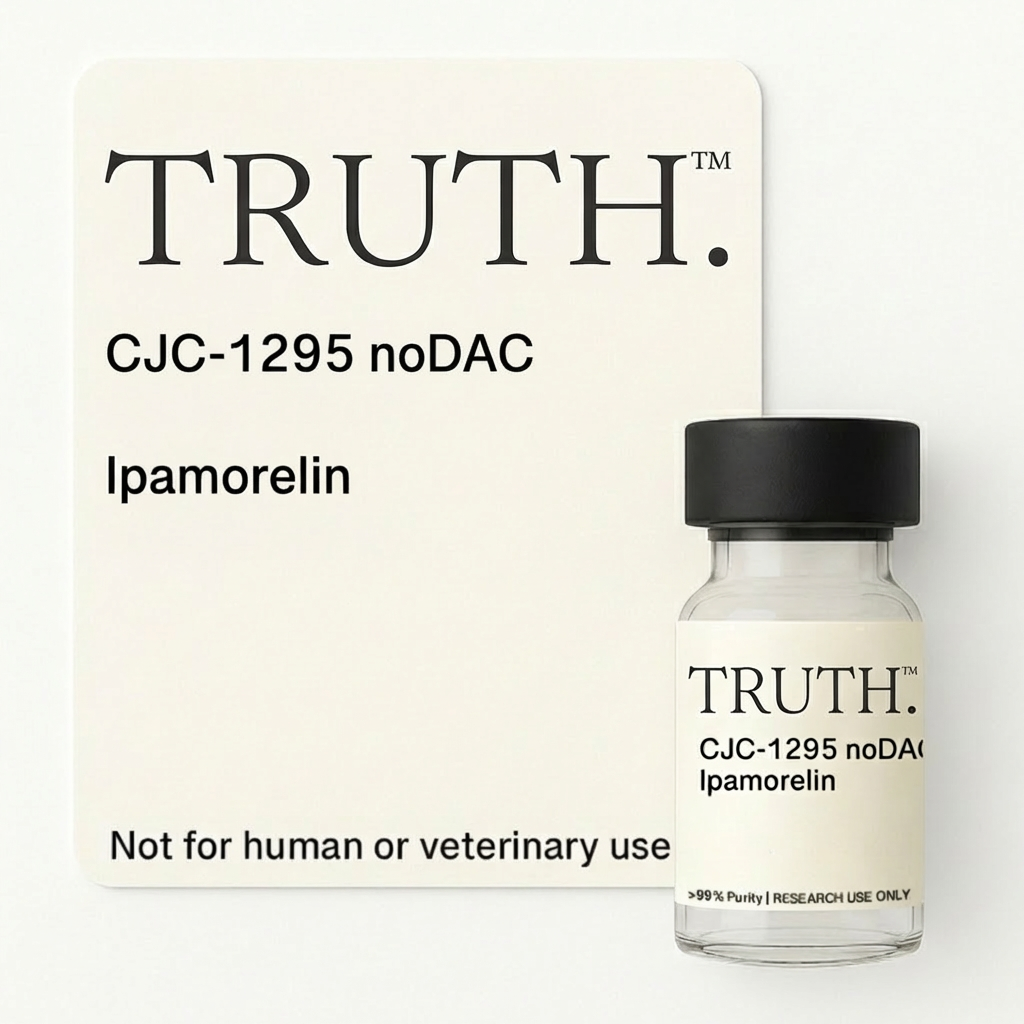
CJC1295 NO DAC 5MG+ Ipamorelin 5MG
Dual Peptide System for Growth Hormone Pathway Research
🎁 FREE 3ml Bacteriostatic Water with Every Vial Purchased
Every peptide vial order automatically includes a complimentary 3ml vial of bacteriostatic water at no extra cost.
$101.99
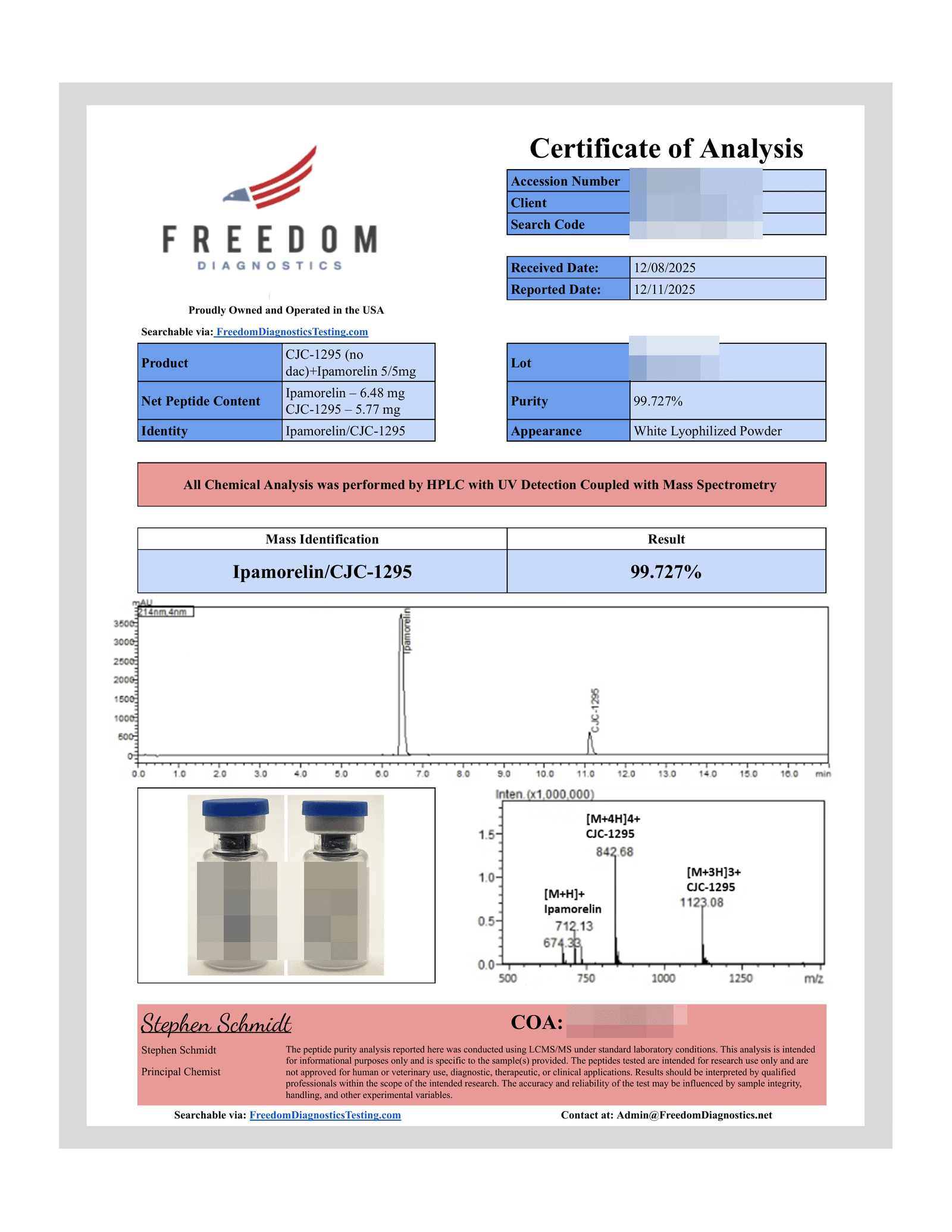
- 99%+ Purity Tested
- Canadian Lab Tested
- Ships from Toronto, Ontario
- Free Bacteriostatic Water with Every Order
Overview
CJC-1295 and Ipamorelin are synthetic peptides commonly studied together in growth hormone (GH) signaling and endocrine pathway research. Each peptide interacts with a distinct receptor system, making the combination a valuable model for examining coordinated GH release, pulsatility, and neuroendocrine signaling.
In research settings, this dual-peptide system is examined for its ability to engage both GHRH and ghrelin receptor pathways without receptor overlap, allowing precise investigation of GH-related signaling dynamics.
CJC-1295 / Ipamorelin is frequently referenced in endocrinology, metabolism, and recovery-focused research models due to its complementary mechanism design.
Mechanism of Action
CJC-1295 and Ipamorelin act on separate but synergistic growth hormone signaling pathways, making their combined study particularly useful in endocrine research.
Research indicates:
CJC-1295 interacts with:
- Growth hormone–releasing hormone (GHRH) receptors
- Pituitary GH signaling pathways
- Prolonged GH signaling dynamics (depending on analog studied)
Ipamorelin interacts with:
- Ghrelin (GHS-R) receptors
- Pulsatile GH release signaling
- Receptor-specific GH activation without broad endocrine stimulation
Unlike single-pathway models, this combination allows researchers to evaluate timing, amplitude, and coordination of GH signaling without direct receptor competition.
Research Applications
Growth Hormone Signaling Research
CJC-1295 / Ipamorelin is widely studied in GH pathway analysis:
- GH release pattern modeling
- Pulsatility and signal timing studies
- Pituitary response characterization
- Endocrine feedback loop evaluation
Metabolic & Endocrine Research
GH plays a central role in metabolic regulation, making this combination relevant for:
- GH-mediated metabolic signaling
- Energy balance pathway research
- Endocrine system coordination studies
Hormonal rhythm analysis
Recovery & Regeneration Research
Growth hormone signaling is closely linked to recovery processes:
- Post-exertion recovery markers
- Tissue repair signaling pathways
- Systemic recovery modeling
- Neuroendocrine recovery dynamics
Sleep & Circadian Rhythm Research
GH secretion is closely tied to sleep architecture:
- Sleep-linked GH pulse timing
- Circadian rhythm alignment
- Night-time endocrine signaling
- Interaction between sleep stages and GH release
Age-Related Research
GH secretion patterns change with age, making this model relevant for:
- Age-associated GH decline studies
- Endocrine aging models
- Hormonal rhythm disruption analysis
- Longevity-related signaling research
Research Advantages
Why Researchers Study CJC-1295 / Ipamorelin
- Dual-pathway GH signaling without receptor overlap
- High specificity for GH-related pathways
- Enables precise pulsatility and timing analysis
- Common reference model in endocrine research
- Suitable for long-term signaling studies
This combination is valued for its regulatory signaling design, rather than forced or non-specific endocrine activation.
IMPORTANT:
This product is exclusively intended for laboratory research purposes only.
Not approved for human consumption or veterinary use.
Not intended for diagnostic, therapeutic, or consumable applications.
Scientific References
Teichman SL, et al. “Prolonged stimulation of growth hormone secretion by CJC-1295.” J Clin Endocrinol Metab. 2006.
Patel K, et al. “Ipamorelin, a selective growth hormone secretagogue.” Endocrine. 1999.
Smith RG, et al. “Ghrelin receptor agonists and GH pulsatility.” Trends Endocrinol Metab. 2005.
Muller EE, et al. “Growth hormone secretagogues: physiology and clinical perspectives.” Endocr Rev. 2010.
Veldhuis JD, et al. “Endocrine control of growth hormone secretion.” Physiol Rev. 2001.