Overview
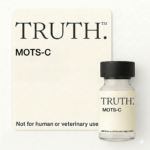
MOTS-C (Mitochondrial Open Reading Frame of the 12S rRNA Type-C) is a mitochondrial-derived peptide consisting of 16 amino acids. It is encoded within the mitochondrial genome and has emerged as a significant signaling molecule in metabolic research. MOTS-C is studied for its role in regulating cellular energy homeostasis, glucose metabolism, and metabolic adaptation.
As a mitochondrial-derived peptide, MOTS-C represents a novel class of signaling molecules that communicate mitochondrial status to the rest of the cell. Research indicates it plays a role in the regulation of metabolic processes by activating AMPK (AMP-activated protein kinase) and influencing the folate-methionine cycle.
Mechanism of Action
MOTS-C exerts its effects through several interconnected metabolic pathways, making it a valuable tool for studying cellular energy regulation and metabolic signaling:
Research indicates MOTS-C engages:
- AMPK activation, a master regulator of cellular energy homeostasis
- Folate-methionine cycle modulation, affecting one-carbon metabolism and de novo purine biosynthesis
- AICAR accumulation, linking mitochondrial signaling to AMPK-mediated metabolic regulation
- Nuclear translocation under metabolic stress, where it regulates adaptive gene expression via interaction with ARE-containing promoters
This multi-pathway signaling profile positions MOTS-C as a critical mediator of mitochondrial-nuclear communication and metabolic adaptation.
Research Applications
Metabolic Regulation
MOTS-C is extensively studied for its effects on glucose metabolism and insulin sensitivity. Research demonstrates that MOTS-C administration enhances glucose uptake in skeletal muscle cells through AMPK-dependent pathways, independent of insulin signaling. This makes it a key research tool for investigating metabolic homeostasis and glucose regulation.
Cellular Energy Homeostasis
As a mitochondrial-derived peptide, MOTS-C plays a central role in regulating cellular energy balance. Studies show it modulates the NAD+/NADH ratio, mitochondrial membrane potential, and oxidative phosphorylation efficiency, providing researchers with insights into mitochondrial-mediated energy regulation.
Exercise Physiology & Endurance
Research has identified MOTS-C as an exercise-induced mitokine. Circulating MOTS-C levels increase during physical activity in humans, suggesting a role in exercise-mediated metabolic benefits. Studies in murine models demonstrate improved physical performance capacity and enhanced skeletal muscle adaptation following MOTS-C administration.
Aging & Longevity Research
MOTS-C levels decline with age in both human and animal models, correlating with age-related metabolic dysfunction. Research investigates MOTS-C as a potential mediator of healthy aging through its effects on metabolic flexibility, cellular stress resistance, and mitochondrial function preservation.
Body Composition Research
Preclinical studies demonstrate MOTS-C prevents age-dependent and high-fat-diet-induced insulin resistance and obesity. Research explores its role in fat metabolism regulation, including effects on lipid oxidation, adipose tissue function, and overall energy expenditure.
Research Advantages
- 99%+ purity verified through HPLC analysis
- Canadian laboratory tested with full Certificate of Analysis
- 30mg per vial — optimized for in vitro and in vivo research protocols
- Lyophilized formulation for maximum stability and shelf life
- Ships from Toronto, Ontario with temperature-controlled packaging
- Free bacteriostatic water included with every order
Research Use Notice
This product is sold strictly for research, laboratory, and educational purposes only. It is not intended for human or veterinary use. Not a drug, supplement, food, or cosmetic. By purchasing, the buyer acknowledges that this product will only be used in accordance with applicable laws and regulations governing research materials.
Scientific References
- Lee, C., et al. (2015). “The mitochondrial-derived peptide MOTS-c promotes metabolic homeostasis and reduces obesity and insulin resistance.” Cell Metabolism, 21(3), 443-454.
- Kim, K.H., et al. (2018). “MOTS-c: an equal opportunity insulin sensitizer.” Journal of Molecular Medicine, 96(9), 869-872.
- Reynolds, J.C., et al. (2021). “MOTS-c is an exercise-induced mitochondrial-encoded regulator of age-dependent physical decline and muscle homeostasis.” Nature Communications, 12(1), 470.
- Zempo, H., et al. (2021). “Relation between plasma MOTS-c concentration and characteristics of resistance training in humans.” Medicine & Science in Sports & Exercise, 53(8S), 169.
- Kim, S.J., et al. (2019). “Mitochondrial-derived peptides in aging and age-related diseases.” GeroScience, 41(3), 257-266.
For research only !!