Overview
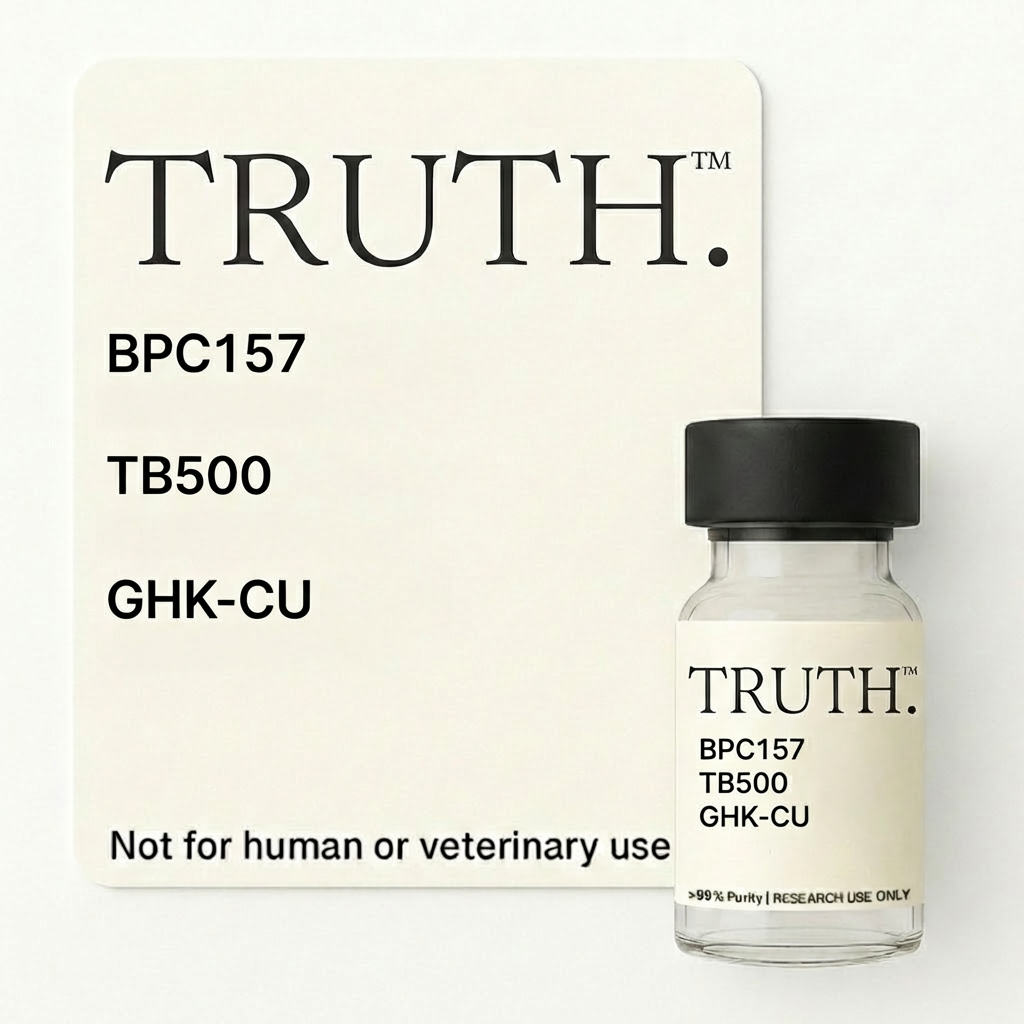
BPC-157 + TB-500 + GHK-Cu is a multi-peptide research formulation combining three well-studied compounds into a single vial. Each peptide targets distinct but complementary biological pathways related to tissue repair, wound healing, and regenerative signaling.
This blend is designed for researchers investigating:
- Synergistic tissue repair and recovery mechanisms
- Collagen synthesis and extracellular matrix remodeling
- Anti-inflammatory signaling cascades
- Angiogenesis and vascular repair pathways
By combining BPC-157, TB-500, and GHK-Cu, this formulation enables the study of coordinated regenerative signaling rather than isolated single-peptide activity.
Mechanism of Action
Each peptide in this blend engages distinct molecular targets, allowing researchers to study multi-pathway recovery signaling:
BPC-157 (Body Protection Compound-157)
- Derived from gastric juice proteins, studied for cytoprotective and tissue-healing properties
- Research indicates involvement in growth factor modulation (EGF, FGF, VEGF)
- Examined for tendon, ligament, muscle, and gastrointestinal repair signaling
TB-500 (Thymosin Beta-4 Fragment)
- A synthetic fragment of Thymosin Beta-4, a naturally occurring actin-sequestering protein
- Studied for its role in cell migration, differentiation, and anti-inflammatory signaling
- Examined in wound healing, cardiac repair, and tissue regeneration research models
GHK-Cu (Copper Peptide)
- A tripeptide-copper complex found naturally in human plasma
- Studied for collagen and elastin synthesis stimulation
- Examined for antioxidant activity, stem cell attraction, and tissue remodeling signaling
Research Applications
Tissue Repair & Wound Healing Research
This blend is widely studied in regenerative medicine models:
- Multi-pathway wound healing signaling
- Tendon and ligament repair mechanisms
- Muscle recovery and regeneration pathways
- Gastrointestinal tissue protection studies
Anti-Inflammatory & Immune Modulation Research
Combined anti-inflammatory properties make this blend relevant for:
- Inflammatory cytokine modulation
- Immune cell migration and signaling
- Chronic inflammation pathway analysis
- Autoimmune signaling research models
Collagen & Skin Regeneration Research
GHK-Cu and BPC-157 together enable study of:
- Collagen Type I and III synthesis pathways
- Extracellular matrix remodeling
- Skin elasticity and repair signaling
- Fibroblast proliferation and migration
Cardiovascular & Vascular Repair Research
TB-500 and BPC-157 are studied in vascular contexts:
- Angiogenesis and new blood vessel formation
- Cardiac tissue repair signaling
- Endothelial cell migration studies
- Vascular integrity and protection models
Research Advantages
Why Researchers Study BPC-157 + TB-500 + GHK-Cu
- Three complementary peptides in a single research-ready formulation
- Enables study of synergistic recovery and repair signaling
- Covers tissue repair, anti-inflammatory, and collagen synthesis pathways
- Relevant across musculoskeletal, dermal, gastrointestinal, and cardiovascular research
- Frequently referenced in regenerative medicine and wound healing studies
This combination is valued for its multi-target regenerative profile, enabling systems-level research rather than single-pathway investigation.
IMPORTANT:
This product is exclusively intended for laboratory research purposes only.
Not approved for human consumption or veterinary use.
Not intended for diagnostic, therapeutic, or consumable applications.
Scientific References
Seiwerth S, et al. “BPC 157 and standard angiogenic growth factors.” Curr Pharm Des. 2018.
Goldstein AL, et al. “Thymosin beta-4: a multi-functional regenerative peptide.” Expert Opin Biol Ther. 2012.
Pickart L, et al. “GHK-Cu may prevent oxidative stress in skin by regulating copper and modifying expression of numerous genes.” Cosmetics. 2015.
Gwyer D, et al. “Gastric pentadecapeptide body protection compound BPC 157 and its role in accelerating musculoskeletal soft tissue healing.” Cell Tissue Res. 2019.
For research only !!